A funding model that protects modernization and keeps technical debt from quietly consuming the next transformation.
 Budget season has a way of stripping the adjectives out of strategy.
Modernization may be strategic. AI may be urgent. Technical debt may be a board-level concern. Then the line items arrive. Regulatory commitments are fixed. Contracts are already signed. Run costs have to be covered. The remaining transformation work competes for what is left.
That is when we learn what the organization is actually prepared to fund.
A budget is strategy you can touch because it converts priorities into trade-offs. It tells people which work gets protected, which bets can move and which costs leadership is willing to carry into the future.
For transformation leaders the goal is to make those trade-offs visible before budget pressure makes them by default.
Separate Operate, Bets and Lifecycle
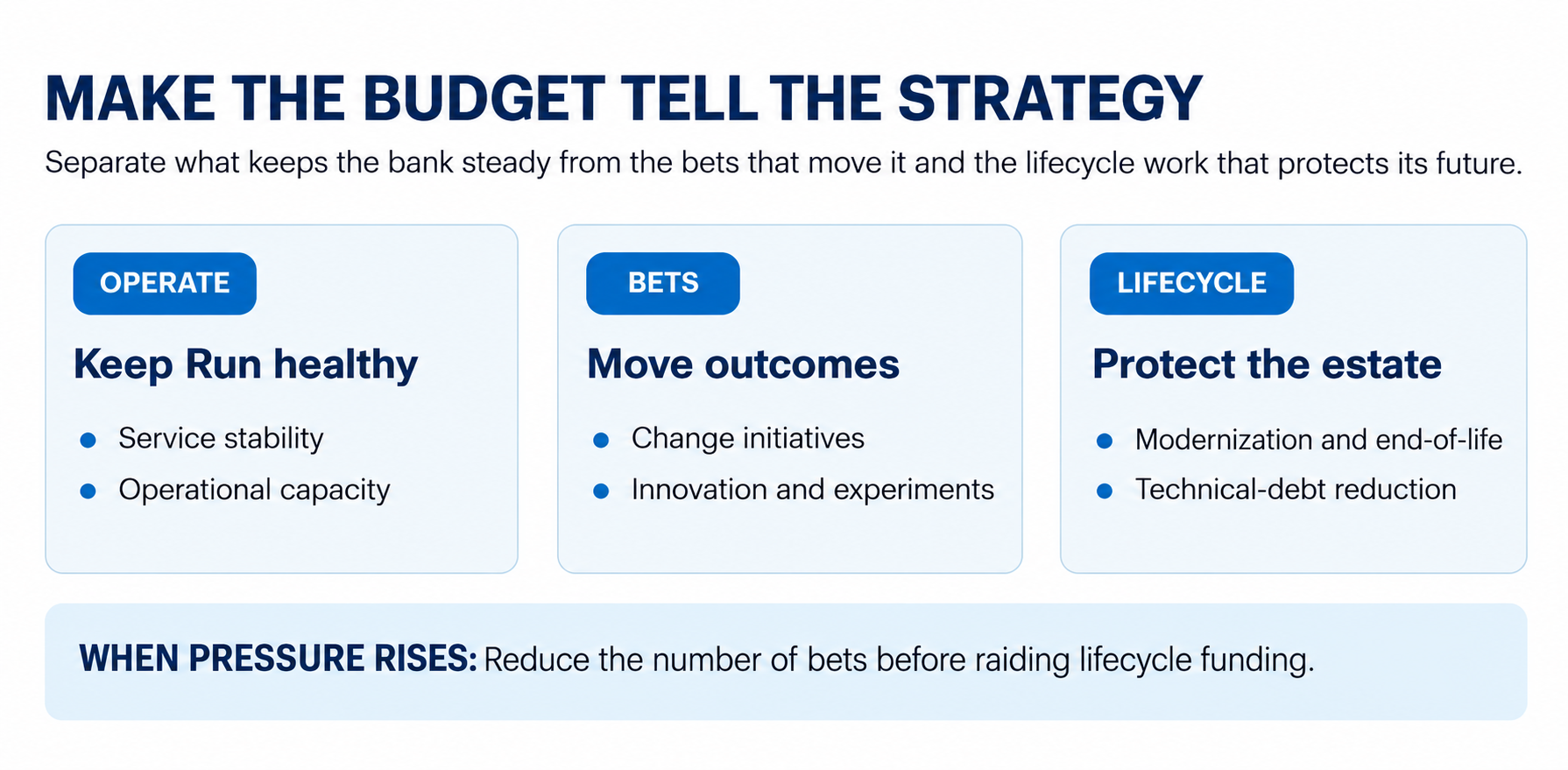
A useful budget view starts with three lanes.
- Operate: covers the health of Run the Bank and the capacity required to keep services steady.
- Bets: fund Change and Innovate work that is expected to move outcomes.
- Lifecycle: protects modernization, end-of-life work and the reduction of technical debt.
The third lane is the one that tends to disappear when budgets tighten.
That is why I like treating lifecycle as a standing obligation, closer to rent than a discretionary project. It belongs in every annual budget and should stay protected throughout the year. When pressure rises reduce the number of bets before raiding the work that keeps the technology estate healthy enough to support the next round of change.
This framing also gives the leadership team a cleaner conversation. A new digital initiative is no longer competing invisibly with a core upgrade or an end-of-life platform. The trade is visible.
Technical Debt Has Gravity
Technical debt rarely arrives as a single invoice. It shows up as manual reconciliation, aging platforms, specialist support, duplicate integrations, fragile batch jobs and workarounds that became permanent years ago.
Those costs accumulate. So do the recurring costs of the new technology we add.
Daniele Tonella, Chief Technology Officer at ING, describes this as a gravitational effect. Every significant platform or capability brings some combination of depreciation, licensing, maintenance and operating cost that continues after the implementation team has moved on. Looking only at the first-year business case can hide how much of the next three to five years has already been committed.
Tonella also offered a useful benchmark for the change budget: roughly 40 percent devoted to cleaning up the existing estate, reducing technical debt and converging on shared platforms with roughly 60 percent funding genuinely new capability.
The exact ratio will vary by institution. The discipline behind it matters more than the number. If every dollar available for change is pointed at something new the bank slowly consumes the headroom required to keep creating new things.
Lifecycle investment creates that headroom.
Fund Outcomes Rather Than Motion
Traditional project funding can reward activity. The project launched. The team hit a milestone. The vendor delivered the release. Another tranche gets approved.
Transformation funding should look for evidence that the outcome is moving.
Signals worth tying to the next funding decision include:
- Adoption by the target group
- Benefit against the baseline
- Risk movement on the top items
- Exception recovery on the affected journey
- Customer abandonment when the change touches a customer process
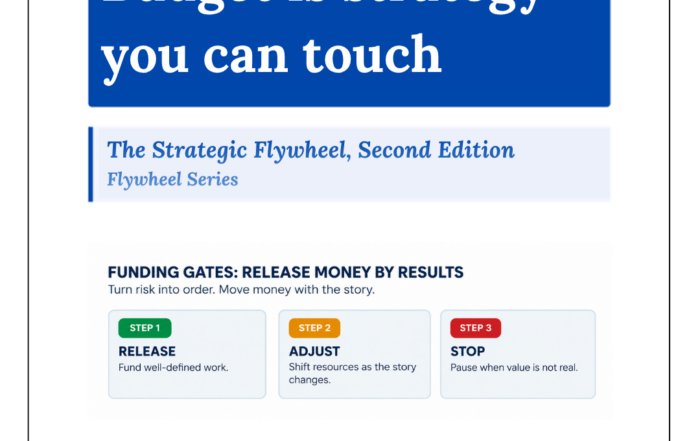
Those signals can drive simple funding gates. Green releases the next tranche. Yellow triggers a scope cut or a shorter learning window. Red stops the work and returns the money to the pool so the next best bet can move.
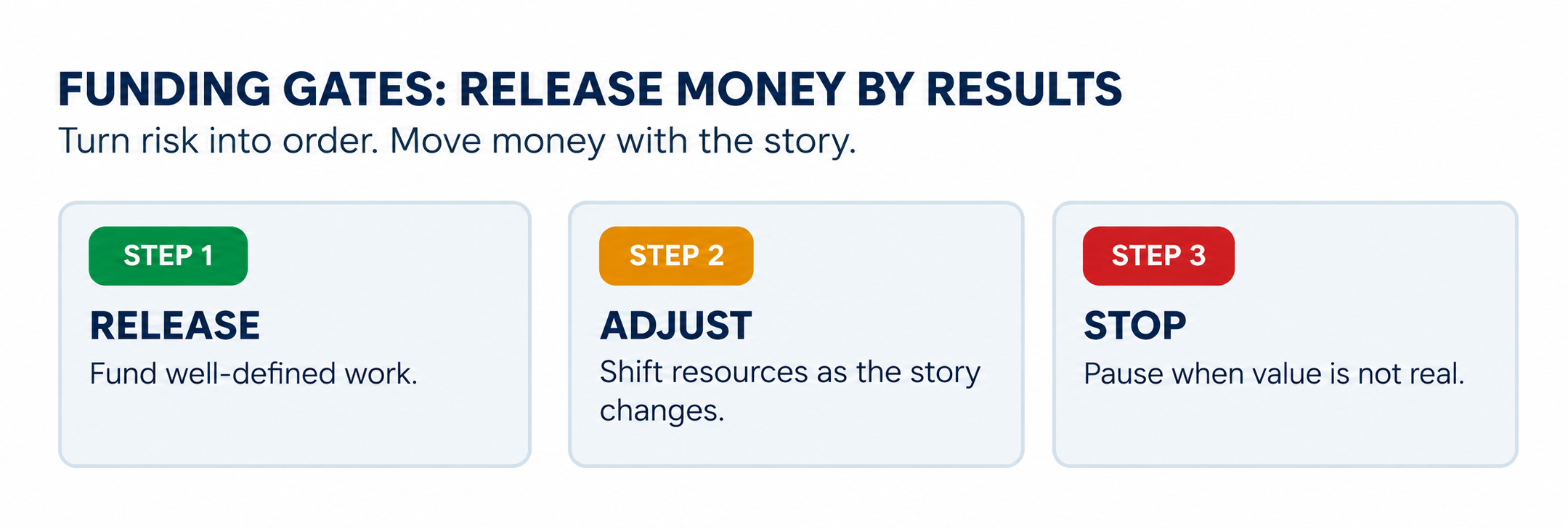 That approach changes behavior. Teams know before they start what evidence will justify continued investment. Sponsors have a cleaner way to stop a weak initiative without turning the decision into a political event.
We also get better at learning from work that stops. A pilot can fail to clear the bar and still leave behind a reusable integration pattern, a sharper understanding of the process or a better definition of the customer problem.
The budget can reward learning without funding motion forever.
Capacity Belongs in the Budget
Transformation budgets routinely price the software, the implementation partner and the consultants while assigning a cost of zero to the internal expertise the work depends on. That expertise is not free.
The same people who understand the bank well enough to design a good solution are usually the people keeping today’s operation running. If a payments specialist is expected to give a transformation program 30 percent of her week the organization has to decide where that 30 percent comes from.
Backfill has a cost. Overtime has a cost. Delayed transformation has a cost. Constantly borrowing the same expert from operations has a cost too even when it never appears on a project invoice.
Capacity planning and financial planning belong in the same conversation.
A credible business case should show the internal commitment required to deliver and operate the change. Otherwise the budget can appear fully funded while the work remains starved of the people who make it real.
Give AI Controlled Flexibility
AI makes the traditional annual budget cycle less forgiving because a useful capability may appear after the plan is locked.
The answer is controlled flexibility. A bank can reserve a modest innovation allocation, release money in stages and define decision dates before the experiment begins. Low-risk pilots can move through a faster lane while anything touching regulated flows, customer decisions or critical operations receives the controls it deserves.
This gives the institution room to learn without creating a blank check.
It also keeps AI investment connected to the rest of the portfolio. If a promising use case needs a scarce SME or a new integration the operating rhythm exposes the trade. If it proves value the funding model can move it forward. If adoption stalls the money returns to the pool.
That is a healthier model than trying to predict every worthwhile AI use case during the prior year’s budget cycle.
Decisions and Dollars
The operating rhythm from the previous article and the budget model here are two sides of the same discipline.
The rhythm decides what moves. The budget gives those decisions oxygen.
A disciplined portfolio review without funding creates well-managed frustration. Funding without disciplined prioritization creates an expensive collection of projects. When the two work together leadership can see where people and money are going and why.
That alignment is especially important as banks modernize core technology and absorb faster-moving AI capabilities. The institution needs enough stability to Run, enough capacity to Change and enough protected room to Innovate without quietly sacrificing the lifecycle work that makes all three sustainable.
Put the strategic priorities beside the budget and the resource plan. They should tell the same story.
If they do not the gap is valuable information. It tells us exactly where the transformation strategy still needs to become operational.
That is also the logic behind the next evolution of the OptimizeCore® Scorecard: make the operating model, capacity, technology and funding choices visible enough to act on them.
Coming Soon
The Strategic Flywheel, Second Edition expands on the funding model behind this article, including Operate, Bets and Lifecycle, lifecycle protection, multi-year cost gravity and results-based funding. Watch for the new edition from Core System Partners.
#CoreBankingTransformation #BankingAI #BankingTransformation