The latest AI hiring numbers caught my eye for a reason that has little to do with recruiting.
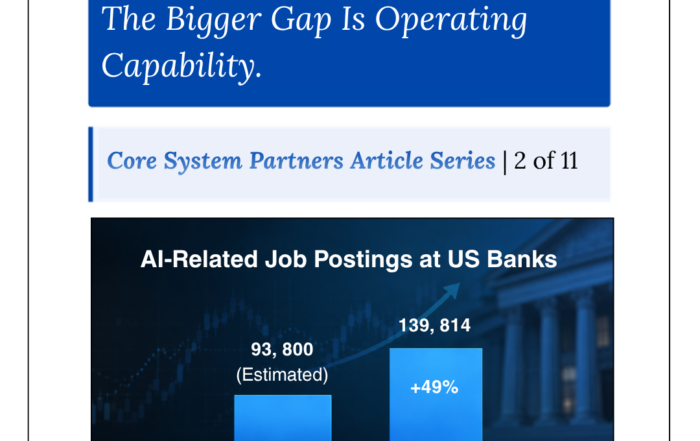
According to hiring data from Draup reported in early October, major banks generated 139,819 AI-related job listings in 2026. That represented a 49 percent increase over 2025. Mentions of AI agent orchestration jumped 1,721 percent.
Those are big numbers. They also need context. Job listings measure demand for skills rather than people hired or programs successfully deployed. A rapid rise in a skill mention can begin from a relatively small base.
What interests me is the management problem underneath the numbers. Banks are building AI capability while they are still working out who will run it, which processes will change and who will be accountable when something goes sideways.
The scarce skill sits between banking and technology
Most institutions can find technology specialists. Finding someone who understands the technology well enough to challenge its design and understands banking well enough to challenge its application is another matter.
Consider a loan-servicing workflow. An AI agent may be able to collect documents, identify exceptions and prepare a recommended action. The hard part is deciding which exceptions it may resolve, which require human review and what evidence the bank must retain. That requires operations, risk and technology to work as one team.
I have seen similar challenges in core programs. An institution can buy an excellent platform and still struggle because its internal teams have no shared view of how the work should operate after implementation. Hiring more specialists rarely fixes an ownership problem.
JPMorganChase provides one useful contrast. CEO Jamie Dimon has described nearly 1,000 AI use cases in production, with approximately 50 considered significant. Its technology leadership has also been treating AI fluency as an expectation for engineers rather than a narrow specialty.
That signals an organizational investment. Technology skills become part of everyday operating capability instead of living in one isolated team.
Managers carry the change
Senior leadership can approve the AI strategy. Engineers can implement models and tools. The people in the middle must redesign workflows, coach employees and manage the exceptions that appear after launch.
That layer is often overlooked.
A branch operations manager who has spent twenty years building a dependable process knows where failures occur and where customers get frustrated. Put that experience in the room with people who understand agent orchestration and you have the beginnings of a credible design. Leave the manager out and the process may look terrific in a demonstration while creating trouble in production.
Banks also need to be candid about workforce impact. Some AI roles are expanding while repetitive processing and routine analytical work are under pressure. Those changes are connected. Leaders should define how existing employees will be retrained and where human judgment becomes more valuable.
Build the roles before writing the job descriptions
I would start with four practical decisions.
- Name an owner for each material AI-enabled workflow. Give that owner authority over the process outcome.
- Establish who can approve, pause or withdraw an AI capability when the risk changes.
- Assign data ownership and traceability across the tools, vendors and banking systems involved.
- Invest in the managers responsible for redesigning the work. Pair banking expertise with technology capability rather than expecting either side to carry the entire load.
External partners can provide specialized engineering and implementation capacity. Banks still need to retain judgment about which decisions a system may make on their behalf.
The best measure of progress will be the number of workflows operating reliably under clear ownership. The job-posting count may keep rising for a while. The management discipline needs to catch up now.
Covered in Don’t Blink, my weekly Banking Intelligence Service brief: Issues #36 and Issue #31.